

Democratizing AI Training and Access Statewide
An NSF workshop series for Kentucky’s higher education researchers and innovators
Unlock the power of Artificial Intelligence
Attend a Democratizing AI Training and Access Statewide Workshop to learn how to use and apply AI in your work, as well as access secure AI infrastructure available through the National Artificial Intelligence Research Resource Pilot (NAIRR). Space is limited and open to all Kentucky higher education researchers and innovators—apply now to secure your spot!
Democratizing AI Training and Access Statewide
The Center for Applied Artificial Intelligence (CAAI) has been awarded a grant from the National Science Foundation’s (NSF) Educate AI Initiative and NAIRR Pilot Program to democratize AI and training access for Kentucky’s geographically isolated and underserved researchers and innovators. The NSF and NAIRR programs aim to spur innovation, develop the next generation of talent for a well-trained AI workforce, and connect U.S. researchers and educators to compute and training resources to advance AI in research. In partnership with the Council on Postsecondary Education (CPE) and the Kentucky Community and Technical College System (KCTCS), five Democratizing AI Training and Access workshops will be conducted across Kentucky, bringing together subject matter experts, researchers, innovators, and higher education and workforce entities to empower participants to apply AI in their work and access local and NAIRR Pilot cyberinfrastructure.
Each workshop combines foundational presentations with practical sessions, providing guided use of AI models and computational tools. Continuous learning and collaboration are available to participants post-workshop via curated online resources and ongoing communication, video tutorials, office hours, and an interactive online forum. A CAAI NAIRR Pilot chatbot will be available to help users find information, including NAIRR cyberinfrastructure and resources. The chatbot will also integrate the workshop resources and materials, offering participants practical guidance on navigating and submitting allocation requests for AI compute resources.

Join us at Jefferson Community & Technical College in Louisville, KY, on January 23, 2026.
Join us at Gateway Community & Technical College in Florence, KY on February 26, 2026.
Join us at Hazard Community & Technical College in Hazard, KY on March 26, 2026.
Join us at Henderson Community College in Henderson, KY on April 17, 2026.
Join us at the University of Kentucky in Lexington, KY TBD.
What is the NAIRR Pilot Program?
The NAIRR Pilot aims to connect U.S. researchers and educators to computational, data, and training resources needed to advance AI research and research that employs AI.
Artificial Intelligence (AI) holds the potential to accelerate discovery and innovation and reshape our modern workforce. However, many researchers and educators lack access to the AI resources necessary to fully conduct their research activities and to train the next generation. The National Artificial Intelligence Research Resource (NAIRR) is a concept for a shared national research infrastructure to bridge this gap by connecting U.S. researchers and educators to AI resources, namely computation, data, software, models, training, and educational materials to advance research, discovery, and innovation. Access to such infrastructure is expected to: accelerate AI and AI-powered Discovery and Innovation; expand the AI workforce and train the next generation of AI researchers and educators; increase capacity, integration, and use of world-class public and private-sector AI resources; and advance AI interpretability, security, and trust.
The NAIRR pilot is a proof-of-concept for the eventual full-scale NAIRR. The pilot focuses on supporting research and education across the nationwide research community, while gaining insights that will refine the design of a full NAIRR.
The pilot broadly supports fundamental, translational and use-inspired AI-related research with particular emphasis on societal challenges. The pilot also trains the next generation of AI researchers and educators by providing access to infrastructure and training resources.
For more information about this effort, please visit the NSF-hosted NAIRR Pilot website.
NAIRR Pilot Expansion Projects are multidisciplinary efforts involving teams of educators, researchers, and community engagement specialists who are undertaking specific capacity-building challenges that broaden access to, training on, or educational use of one or more NAIRR Pilot resources. Expansion Projects are aimed to expand the NAIRR Pilot community and enhance utilization of resources through targeted outreach, training, and inclusive community experiences.
The NAIRR Pilot Resource Catalog hosts resources available to researchers. Resource types such as Cloud, GPU Compute, Innovative / Novel Compute, CPU Compute, Service, Sensors / Instruments. With categories that comprise of federal agency systems, private sector computational resource, private sector model access, other private sector contributions, and the Classroom Platform.
For more information about the Resource Catalog, please visit the NAIRR Pilot Resource Catalog.
About the Center for Applied Artificial Intelligence (CAAI)
The Center for Applied Artificial Intelligence (CAAI) is a specialized team that empowers faculty, staff, researchers, and clinicians to use AI. Operating like a problem-solving think tank, our staff includes early- and late-career software developers, project managers, data scientists, and advisors who help collaborators overcome common AI barriers in technical expertise and access to secure compute resources. We are guided by tenets of empowering, exploring, and doing. Without requiring technical backgrounds or costly investments, we help our collaborators quickly turn ideas into solutions that make an impact for the communities they serve. To date, CAAI has been the lead contributor on 65 AI projects, has completed 42 projects, and maintains a network of 43 partners and more than 120 individual collaborators.
Resources and Information
Resources and information to help support continued learning
NAIRR Pilot Resource Catalog
NAIRR resources for researchers
YouTube
On-Demand video content
Online Forum
Join the coversation
Workshop Archives
Materials presented at each event
Democratizing AI Training & Access Statewide Office Hours
Connect with AI subject matter experts from the workshop
Speakers







Dr. Adel Elmaghraby
Jefferson Workshop
Adel S. Elmaghraby, an IEEE Life Senior Member, is the Speed School Director of Industrial Research and Innovation and Winnia Professor of CSE and former chairman of the Computer Engineering and Computer Science Department at the University of Louisville. He has also held appointments at Carnegie Mellon’s Software Engineering Institute and the University of Wisconsin-Madison, and has advised over 60 master’s graduates and 24 doctoral graduates. His research and publications span intelligent systems, neural networks, cyber-security, visualization and simulation. The IEEE-Computer Society has recognized his work with multiple awards including a Golden Core membership.
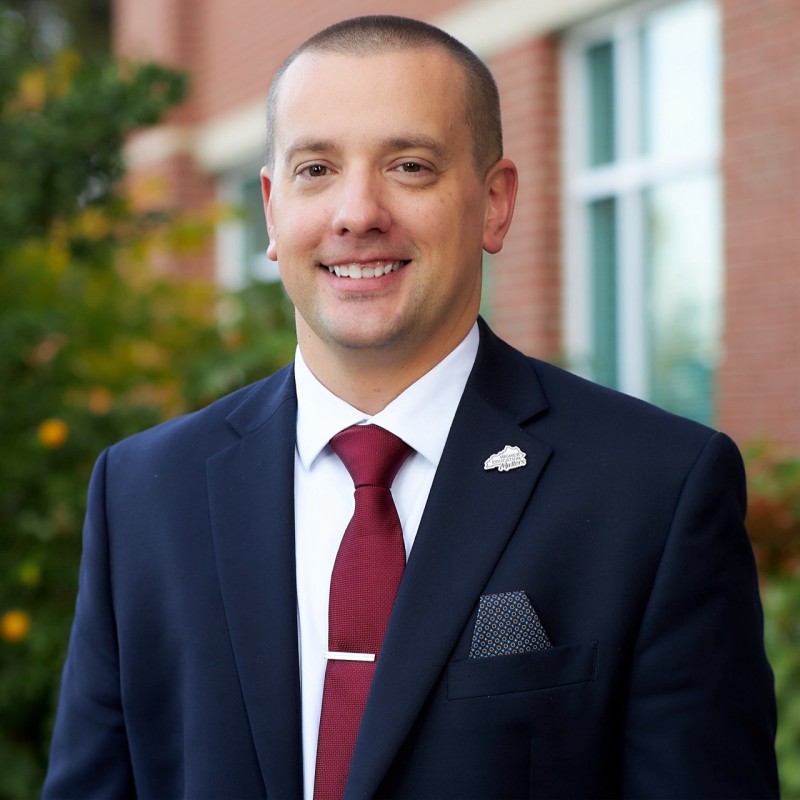
Dr. Ledford
Jefferson, Gateway, & Henderson Workshops
Dr. Christopher Ledford serves as the Director of Data and Advanced Analytics at the Kentucky Council on Postsecondary Education (CPE). In this role, he uses data analytics to generate inferences around improving postsecondary affordability, transitions, success, equity, talent, and value in Kentucky. Prior to CPE, Dr. Ledford served in various teaching and IR positions that grew his passion for serving students. As an institutional researcher, he led award-winning projects that shaped institutional policy around student basic needs, utilization of student communication tools, and improved demographic representation of students among institutional employees. In the classroom, Dr. Ledford enjoyed teaching political science students the skills necessary to be empirical, thoughtful, and civic-minded citizens. Now at CPE, he continues to serve students by transforming Kentucky postsecondary data into actionable strategies and policies that improve student access to higher education and credentials of value.

George Insko
Gateway Workshop
George Insko is a well seasoned cybersecurity executive with more than two decades of experience leading enterprise security, incident response, and digital-forensics ops. His career includes roles as CIO, CISO, and Enterprise Architect, aiding organizations in tackling technological, regulatory, and geopolitical challenges. With a foundation in intelligence, natural resource management, economics, and political science, he has recently led initiatives at the intersection of cybersecurity and AI. He helps organizations securely adopt AI, manage emerging models, and integrate intelligent automation into security. Known for building high-performance teams, he also promotes leadership in technical and operational areas. A true practitioner, he blends expertise in networking, threat hunting, and incident response with a focus on business results and responsible innovation.

Travis Muncie
Hazard Workshop
Travis Muncie is the Assistant Vice President for the Data and Advanced Analytics unit at the Kentucky Council on Postsecondary Education (CPE). In his role, he oversees the agency’s data strategy, information systems, policy research, and application development. Travis has an extensive background in higher education information systems and was the chief architect of the agency’s Interactive Data Center. He also led the development of the accountability framework for Kentucky’s 2022-2030 Strategic Agenda for Postsecondary Education. Travis holds a B.A and M.S. from Morehead State University and is currently pursuing his doctorate in the Studies in Higher Education PhD program at the University of Kentucky.

Danna Barnett
Hazard Workshop
Danna Barnett is the Director of Entrepreneurship at Shaping Our Appalachian Region (SOAR), where she leads the Business and Innovation Unit as the designated Innovation Hub for Eastern Kentucky through KY Innovation and the Kentucky Cabinet for Economic Development. She leads the growth of a tech-driven entrepreneurial ecosystem, develops programming for student and community entrepreneurs, and connects Eastern Kentucky to statewide and national innovation resources. Danna also oversees the Eastern Kentucky Runway Social Enterprise Accelerator, which supports entrepreneurs building businesses that address workforce barriers such as childcare, housing, and transportation. She also helps lead AI-focused programming, including AI Startup Sprints and the integration of AI into accelerator curriculum, equipping founders with practical tools for innovation, growth, and problem-solving. A graduate of the University of Kentucky, she earned a BBA in Marketing with a minor in Communication as a Robinson Scholar and Chellgren Fellow, and she holds a Credential of Readiness in Business Analytics, Financial Accounting, and Managerial Economics from Harvard Business School Online. Passionate about mentoring the next generation, she is committed to advancing leadership, innovation, and economic opportunity in Appalachia.

Rusty Justice
Hazard Workshop
Rusty Justice is an entrepreneur from Eastern Kentucky. His business investments provide services in engineering, mining, land development, telecom, software, and broadcasting. He holds degrees from the University of Kentucky in Mining and Civil Engineering and is a Fellow in the UK Engineering Hall of Distinction. He is also a graduate of MIT’s Regional Entrepreneurial Accelerator Program and a founding member of Accelerate Kentucky, a nonprofit focused on supporting Kentucky’s entrepreneurs and innovators. Rusty combines his love for business and engineering with a deep appreciation for Appalachia’s rich heritage. He works to leverage his capabilities to grow the local economy through diverse projects with cultural value that celebrate the Appalachian identity and promote its future.

Dr. Manmeet Singh
Henderson Workshop
Dr. Manmeet Singh is an Assistant Professor in the Department of Earth, Environmental, and Atmospheric Sciences at Western Kentucky University. His interdisciplinary research lies at the intersection of climate science, artificial intelligence, and Earth system modeling. Before joining WKU, Dr. Singh was a Distinguished Postdoctoral Fellow at The University of Texas at Austin, where he worked on AI-augmented weather and climate prediction systems to improve forecasts related to extreme weather, health impacts, and disasters. He also served as a Scientist at the Indian Institute of Tropical Meteorology (IITM), contributing to national climate modeling efforts and leading several projects on aerosol-monsoon dynamics and climate data downscaling. Dr. Singh holds a Ph.D. in Climate Studies from the Indian Institute of Technology Bombay. His research has been recognized globally, including participation in high-impact international collaborations such as the Paris Olympics 2024 Research Demonstration Project and the Earth Virtualization Engines. Dr. Singh also maintains an active interest in mentoring, open science tools, and advancing geoscience education through digital platforms.
Join us! Apply now to secure your spot.
Seating is limited!
faq
These workshops are designed for new and emerging researchers at Kentucky’s two- and four-year institutions, including early-stage career researchers. If you are interested in exploring how artificial intelligence can be applied within your work, this is for you!
Workshop locations will include sites across the state to ensure broad accessibility. Please monitor the program’s website for the most current information.
No prior AI experience is required. After registering, you will be invited to complete a short pre-workshop survey to share your interests and technical background. This information will inform workshop planning, ensuring the content is tailored to the needs of each workshop group.
No, there is no cost to attend. Lunch will be provided at each day-long workshop.
The initiative is committed to fostering a safe and welcoming environment. Every effort will be made to provide reasonable accommodations for participants. Funding support for travel, including mileage reimbursement, is available by application. Registrants may indicate both accommodation requests and interest in travel support directly on the registration form.
Thanks to our funding agency, the National Science Foundation (NSF), there are limited participant support funds available in the form of a flat-rate gift card for eligible attendees. Travel funds are awarded on a first come, first served basis by the organizing committee. To qualify, participants must:
- Be an enrolled student at a Kentucky college or university
- Have a residence they are traveling from located more than 60 miles from a workshop location.
If you are interested, please indicate this on your registration form.
In the event of weather, we defer to the hosting campus for safety considerations. If the event is canceled due to weather, it will be rescheduled to a backup date.
This material is based upon work supported by the National Science Foundation under Grant no. 2528161. Any opinions, findings, and conclusions or recommendations expressed in this material are those of the author(s) and do not necessarily reflect the views of the National Science Foundation.